Things Take Time

Photo by Kelvin Valerio on Pexels.com

Whether I’m trying to promote growth and development, or healing it’s helpful to :

Remember things take time. Growth and healing rarely happen quickly much less overnight. We know this but it’s so easy to forget.

Allow them the time they take. Much easier said than done. But, when I can do it I’m able settle in, be patient and present and, not only trust the process, but commit to it.

Take them one thing at a time. Coming back from an injury we might first focus on mobility, then technique, then strength, then work capacity. We don’t try to do them all at once. Taking one thing at a time actually makes it easier to see progress as we cross each threshold and stay focused on the task at hand. The same goes for developing a new capacity or skill. It happens in stages and phases.

Taken together these three things can give us the perspective, patience and focus we need to get where we want to go, to heal and grow in healthy ways and enjoy the process.

It’s All Connected

Photo by Pixabay on Pexels.com

I love looking for and finding connections. Lately I’ve been trying to find the connection between the complex adaptive systems work that is a big part of the Performance Therapy approach used at ALTIS and Fascia Stretch Therapy™️ from Ann and Chris Frederick at the Stretch To Win Institute. And, here’s what I’ve come up with:

  • In any complex adaptive system (like the human body) the parts
    are important but, it’s the way the parts are connected and work
    together that determines how well it can function and adapt to accomplish its purpose.
  • The fascial system connects the different parts and systems of our body and allows them to work together so we can move well, be healthy and accomplish our purpose.
  • When we work with the fascia, using Fascia StretchTherapy™️ we’re improving the connections and allowing the parts to work better together which allows the whole to work better to accomplish the stuff that matters to us.

Making the connection helps me understand even better why what I do with clients is so helpful and important and gives me a simple way to explain it as well.

What Are Your Intentions

Photo by Pixabay on Pexels.com

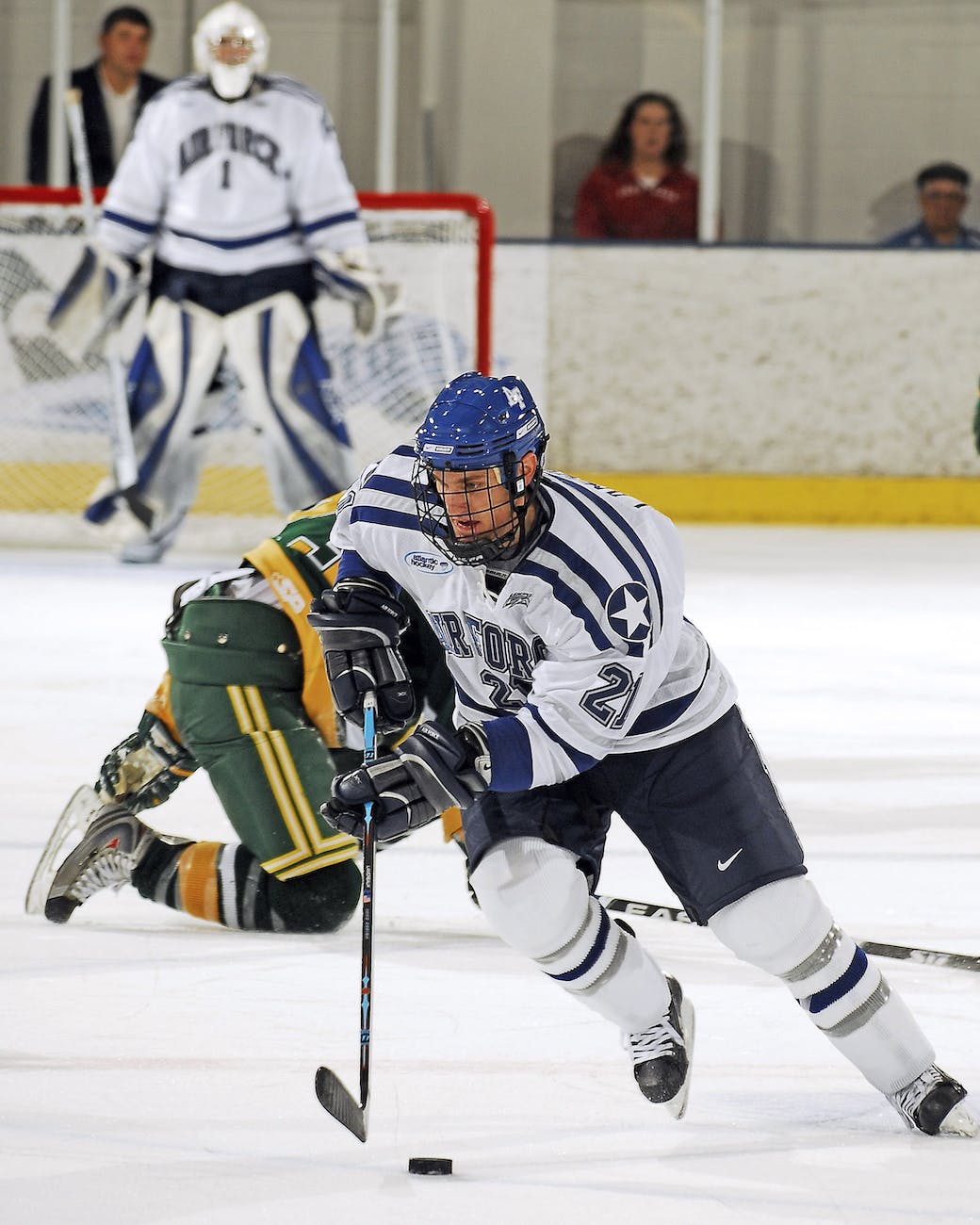
For a few summers I used to watch a group of professional hockey players train in the ice rink attached to the facility I was in. They would come at the goal from different angles at full speed and practice tipping the puck into a specific corner of the net off a specific part of the stick. Toe of the blade into the upper right corner, then into the lower left corner. Heel of the bald into the lower right corner. Off the shaft of the stick into the lower left corner. Over and over they would practice turning their intention into specific movements that put the puck right where they wanted it. It became clear that goals I assumed were accidental deflections or lucky bounces were not that at all. They were intentional.

Those athletes were very clear about their intentions practicing over and over the things that would allow them to turn those intentions into the skilled movements that would give them the result they were after.

Movement is how we express ourselves in the world. Those athletes were perfecting their form of expression just like any performing artist. Perfecting it to the point where there was no separation between body and mind. We were seeing exactly what they intended.

That’s not just for elite athletes though. Getting clear about our intentions, what we’re wanting to create or accomplish or do helps us focus our movements and actions and experience the satisfaction, the sense of agency and the joy that comes from fully expressing ourselves in the world.

Focus On This One

Photo by Markus Spiske on Pexels.com

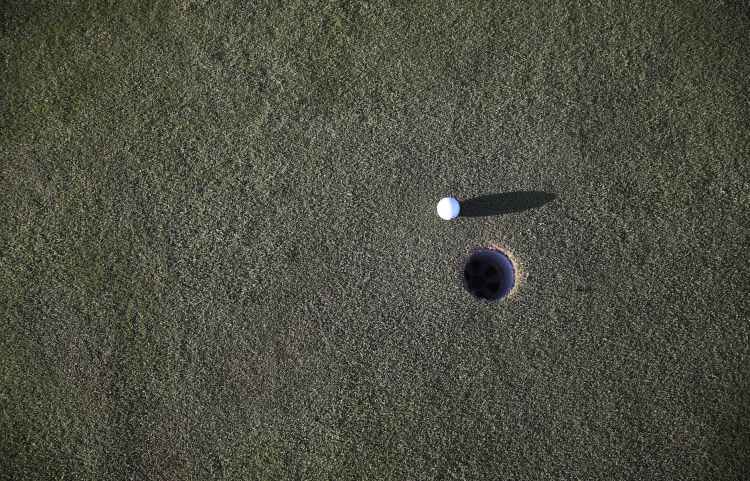
One of the lessons sports teach us is to focus on the shot in front of you. It’s easy to get stuck thinking about the last shot, or let our thoughts drift to the next one. Thinking about the last shot doesn’t change where we on the course or the court or the field though. We’re here, now. And, the next shot will be determined by what happens with this one. For the moment time stands still. There is only one shot; the one in front of us.

Time travel , going back and forth between the past and the future, takes a lot of energy and can tie us up in knots. There’s a freedom, a spaciousness that occurs when we decide to focus on the shot or the play in front of us. We’re free to act without holding back, to go all in, to hit the shot or make the run with conviction. And then, whatever happens we move on, and focus on the shot in front of us.

Small Moves And Thresholds

Two things about small moves. First of all they’re small. Sometimes so small that any sense of progress or change is  nearly impossible to discern. Because, you see,  they’re not really about progress. They’re about emergence and unfolding; about growth and transformation. That’s how nature works.  Centuries ago, the Chinese philosopher Lao Tzu wrote, ” Nature never hurries. Yet everything is accomplished.”  

Second, they’re the surest way to get where you want to go. We are distracted by stories of heroic action and big leaps. But, it’s the small moves that set the stage to make a big leap. And, the big leap is not big because it’s a giant step, but because it takes us across a threshold into a whole new territory with new rules, new relationships, new opportunities and challenges. A new world and a new way of being.

We  talk about progress towards goals and our sense of it is as something linear. But that puts our focus on the goal rather the actions we’re taking.  The challenge is to let go of the idea of progress and instead  put our attention on the small steps and  completed cycles that lead to change and growth.  It’s a process that naturally brings us, when the time is right, to the crossing of a threshold.

Trust that the small moves you made to get here have also prepared you for what’s next.

You Are A Game Changer

Photo by RF._.studio on Pexels.com

Take a moment, right now, to remember a time you did something to change the energy or flow or momentum of a game you were in. What was the situation? Who were you playing? What was happening? What did you do that changed the momentum or energy? Write it down. 

I asked these questions of our summer soccer training cohort. The response from each player was different depending on the context and the player. For one it was deciding to make attacking runs to help her teammates get off their heels and shift their focus. For another it was paying attention to creating space for teammates to be able to step up and play their part. For someone else it was encouragement from the back line. For another it was giving out high fives and fist bumps to help restore the connection between players. 

We think of game changers as the ones who make big plays; the one who scores the go ahead goal in a come from behind win. A great result for sure. We’ll take it. But, changing the game isn’t necessarily about big plays. It’s about the small shifts in energy and flow that got us back in the game so someone could score the winning goal. It’s about the shifts in energy that helped us tighten our defense, or relax when we were getting too tight. 

Changing the game is not about taking over or standing out. Changing the game is not about changing the outcome. None of us can control the final results by ourselves. It’s about showing up in a way and with an energy that others can feel and follow. It’s about creating a shift and the possibility of reaching our potential. 

We each have our own ways of changing the game. If you want to get some insight into your inner game-changer do that remembering activity three times and you’ll start to see patterns. Better yet do it with a friend or teammate and you’ll really get some insight. We all have what it takes to be game-changers. Let’s start.

Play The Shot In Front Of You

Photo by Pixabay on Pexels.com

Two weeks ago Lydia Ko shot a 62 on the final round of the ANA Inspiration 2021 LPGA tournament. When asked about that round she shared three things that helped her tie the course 18 hole record.

  1. ” I stayed patient.”
  2. “No matter what the situation was’ , she said, ‘ I was just focusing on the shot in front of me.”
  3. “I was hitting every shot with conviction and at the end of the day that’s all you can do.”

We often mistake things like patience, focus and conviction for character traits or qualities that are just a part of someone’s make up. But, the truth is they are skills that we can develop just like swinging a golf club or playing the piano. And, just like playing golf or making music they grow with practice.

In my coaching with athletes and clients we approach these things as skills and capacities we can develop, make them part of our training sessions and look for opportunities to use them in the world outside of sport. Technical skill matters but more often than not, it’s these skills that help us open up our potential. Is there a skill you want to develop like focus or patience or compassion and what would it look like to practice that a little every day?

And when it comes to practicing remember Ms. Ko’s lesson; be patient, focus on the shot in front of you, hit it with conviction. That’s all we can do and that’s what makes the difference.

.

Mastery

Photo by cottonbro on Pexels.com

What makes a master gardener a master is not domination of the plants or soil. It’s their understanding of nature, and the skillful application of what they learn, that allows them to contribute to the conditions that makes things grow. 


What if we approached our body the same way? We might discover that mastering our health and performance is first about learning to listen to our body, learning how things work, then applying that knowledge in ways that contribute to our growth. Much more challenging than simply perfecting a workout routine or a nailing a diet, but much more likely to help us flourish and reach our true potential as well.

Mastery, it turns out is about learning to work with, not on our bodies.

Remembering The Basics

Photo by Jesse Zheng on Pexels.com

” We need to get back to basics, focus on the fundamentals.” That’s often the lament when things go astray, whether its our golf game or our relationships, our personal health or the health and well-being of the community.

 
If we don’t have a grasp on what they are though it’s easy to mistake old habits, tactics or strategies that served us in the past for what we like to call the basics. But, as I am constantly reminded, the basics, the fundamentals, are much deeper. We can change tactics and still fail because we aren’t attending to the true fundamentals.


Mike Hebron wrote about golf that it is the angle and speed of the club head as it contacts the ball that determines where it goes. It’s a simple game once you understand that. ( simple and easy being two different things of course) Everything we do is to adjust those two things – variations on the theme.  The basics are not a two count swing or a specific grip. The basics are much simpler: control the speed and angle of the club head as it strikes the ball. Understand that and you can apply it creatively to any situation.


No two situations are exactly the same in sport or in life. Practicing the fundamentals of whatever matters to us refocuses our attention not on old tactics and habits but on the underlying principles of nature at work and challenges us to apply those to new situations, to learn and grow into new possibilities.

Back to the basics may be the wrong way to think about it. The basics don’t take us back. They help us move forward.