When we’re talking about something new it’s almost impossible to see clearly where our efforts will take us. We can get stuck on the first step, wanting to make sure we get it right, thinking it needs to be big and bold. But the first step isn’t bold because it’s big or perfect. It’s bold simply because it’s first. I set off in a general direction with an intention or desire but, the rest has to unfold over time. The rest is still a mystery.
For mundane errands and tasks and those routine excursions of course it’s different. If I have to get to the grocery store and back in time to get dinner ready I can calculate a little more accurately; start here, end here, go this fast. Of course even then, surprises await.
For the adventures, and explorations though, for the times when I want or need to change direction or start something new, I can only start with intention and desire and some small amount of faith. It is about the process, the journey. After the first step it’s all learning, adjustment and mystery.
There is no perfect way to begin. So, the first step just needs to be big enough, bold enough, to get started. The first step just needs to be first.
There was a creek on the farm I lived on as a little kid. In the spring the water rose with the rains and snowmelt, and all kinds of things found their way down it. Branches and sticks that had fallen over winter, autumn’s leaves, a squirrel or bird’s nest that had blown out of a tree. Everything that floated down changed the flow.
Sometimes a branch would get caught between the rocks and leaves would begin to bunch up behind forming a dam. The water would rise until it found its way over or around or pushed things out of its’ way. Sometimes we would break up the little dams to watch the water rush through. It was a game, a way of keeping our creek flowing. Our way of taking care of it.
After a few days we got tired of the game and went on to explore something else. But the flotsam and jetsam would continue to find their way down the creek and build up along the way. As many times as we cleaned it out, it would never stay that way. A creek running through the woods can’t. Nature doesn’t work that way.
Our bodies are like that stream and that little forest, always changing. Sometimes the flow gets jammed up. We get a little dehydrated, we build up some scar tissue, we sit a little longer than usual or move a little more than usual and now we don’t flow quite as easily.
Movement and stretching are ways we keep the flow. Because our world and the way we interact with it are constantly changing it works best to keep things flowing by checking them every day. Getting stuck or sore or stiff doesn’t necessarily mean something is wrong. But it may be a sign that we need to find ways to move, to break things up and get them flowing again. Developing a movement practice that you can enjoy, that fits you and your life is a powerful way of keeping that lifestream flowing. Love to help you with that.
We are expressions of the oscillation between movement and stillness. We each have our own unique patterns of movement and stillness, and our bodies, take on the form of those patterns created out of our intentions and actions, both conscious and unconscious.
When we move, tissues warm, soften, dissolve and re-orient themselves to support the pattern of our movements. Run, hike, dance or swim and you’ll see how your body adapts to make those movements stronger and more efficient.
When we are still the same tissues begin to bind, stick and hold in response. It’s a natural process and part of what helps us heal after an injury or recover from strenuous exercise. We put a cast on a broken arm holding it still so nature can do its work.
Movement frees and re-orients, stillness integrates and re-unites. We need both. The key is finding a healthy balance and the right kind of help to make that happen.
Some of us have had too much stillness, too much sitting, too many zoom calls and too little movement. If you’re feeling stuck, stiff or just finding it hard to get going again, Fascial Stretch Therapy and LifeStretch®️ can help you get moving. No strain, no pain and targeted specifically to what you need. Let’s get you moving the way you want to.
The athletes have finished their warm up and are moving to the line for the start of the workout. It’s a tough one, what we call an “edge” workout. They will challenge themselves – going beyond what they’ve done before. 120 yard runs in 19 seconds, 35 seconds to jog back to the start, 30 seconds to rest and then repeat – 10 times.
They approach the line quietly, intentionally, focused. One of them asks again, “How many of these?” A few of them say something encouraging like, “Alright we got this.” But, this is new territory. And then, they go.
10 sounds so far at the start. You take them one at a time though and pretty soon you’re halfway. You can’t see the end but you’re committed now so you keep on going. You get to eight and realize there are only two left. You are past your edge now, outside the comfort zone of what you have done. You’re tired and feeling the challenge but you’re ok. The last two come and go. The final run is actually one of the fastest.
In an On Being podcast Ashley Hicks, the Director of Black Girls Run shared a wonderful piece of advice given to her shortly before running the Chicago Marathon. Buying a new pair of shoes and feeling low on enthusiasm, the clerk in the running store told her, ” Yeah, the best thing for you to remember is that the blessing is outside of your comfort zone.”
The athlete knows that the body, in order to adapt has to be challenged, to go beyond what it knows to create a new response; increased fitness and strength is one of the blessings found outside our comfort zone.
There is another blessing out there as well and that is the knowledge that exploring the boundary increases the edge. 10 is possible so now maybe 12. Everything inside that new edge is in the comfort zone now. Deep in the match or the race or the game, when you’re feeling that exhaustion, you remember you have already been here, you know this territory and you know you’re not at the edge anymore. You know you can go farther.
We don’t earn our blessings, but we do need to open ourselves to receive them. They are gifts. So, the athlete’s path can become a spiritual one. There is the blessing of the practice itself; of learning how to go outside the comfort zone, explore the edge, receive the blessings, return to the center, integrate them and then adapt and grow in new and sometimes surprising ways.
So find the edge, then lean out just a little further and, here’s a blessing to take you out and back from the poet and philosopher John O’Donohue: May my mind come alive today To the invisible geography That invites me to new frontiers To break the dead shell of yesterdays, To risk being disturbed and changed.
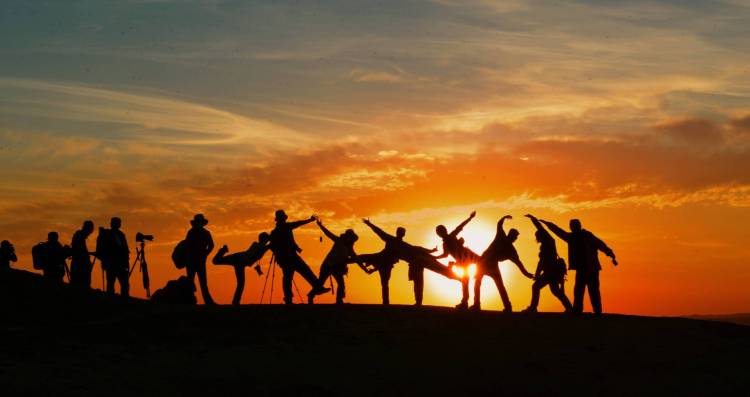
The human body can make all kinds of shapes. Rounded ones, square ones, straight ones, curved and squiggly ones. The one shape that doesn’t seem to be too good for us is the one we make when we’re sitting. Being able to create a variety of shapes as we need them, get in and out of them safely and move from one to the other freely keeps us safe and healthy and opens us up to more possibilities for engaging with our world. We talk about being in shape or out of shape or getting in better shape. We also need to think about the shapes we make.
I suspect that a lot of our play and recreation is about pursuing the experience of grace in one form or another?
We experience it from time to time in our movement when it becomes flowing, rhythmic, powerful. The dictionary refers to it as ” elegance of beauty or form, manner, motion or action. Our swing on the golf course, our cadence on the bike, our feel for the snow and the mountain on our skis become for an instant a kind of sacramental experience of that elegance and flow.
Sometimes it is revealed not in motion or movement but in character. We express a different definition of the word: the exercise of love, kindness, compassion, mercy, favor; a disposition to benefit or serve another like in the story of Sara Tucholsky, Liz Wallace and Mallory Holtman.
Then there are the times when Grace is something more. Grace is the totally unearned gift that transforms us and the moment into something much bigger. This is Grace the way the theologian defines it: an unmerited, divine assistance given humans for their regeneration and sanctification. It’s the 1980 Olympic hockey team or the Women’ World Cup soccer team, but it’s also the hole in one, or the perfect game at the local bowling alley. Playgrounds become holy ground for a moment an our imagination and our hearts get a little bit bigger.
It’s one of the reasons we love to move and play, those little tastes of being alive. Annie Lamott says it so well in her book Traveling Mercies: ” I do not at all understand the mystery of grace – only that it meets us where we are but does not leave us where it found us.”
Keep moving and keep playing. You never know when it’s going to show up.
If you watched our college soccer players conditioning sessions this summer you would have noticed that the session didn’t end when they were done running. You would have seen the players take a few moments to catch their breath and then begin their slow walk halfway down field and back. Then the shoes come off followed by long slow fascial stretching movements and a few minutes of breath work.
We were completing the stress cycle and creating a transition to recovery. We often think that the recovery part takes care of itself as soon as the stress is over but if you’re going from a morning workout to a class to a summer job the stress may never really be over. It’s like racing down the freeway hoping you’ll find a quick chance to fill up before you run out gas. Instead, we build an off-ramp and come to a temporary stop. It’s hard to fill your tank while you’re moving.
Many of us are living with a lot of stress right now and it doesn’t stop when the stressor is gone. For some of us the stressors are never gone they just rotate in and out.
The advantage the players have is being part of a cohort, a culture that values the off ramp, where people are encouraged and expected to take it, where it’s the natural thing to do. We don’t want you running out of gas because we care about you and we want you to be your best.
What would it look like to build off-ramps for the people we live with or serve and create a culture where they felt encouraged and were supported to take them? What would it look like to make taking the off ramp as important as going fast?
It’s typical for an athlete to want to look down during a balance or agility drill. They zoom in on their feet or the obstacle they’re trying to avoid and it seems to make sense … at first.
Then you realize that we’re not really learning to move our feet, we’re learning to move our body, shift our weight, find our rhythm and coordinate the whole thing to change direction and get in position to execute a skill or avoid an opponent. We’re trying to respond gracefully to the moment to accomplish our goal. It’s like dancing. The object isn’t to get the steps right, its to engage with the music and your partner and flow.
Looking down might help a little in the beginning when we’re learning a movement ( although counting out a rhythm actually works better) but once we’re in the wild, out there on the court or the field we need to look up, need to see what’s happening so we actually know how and when to respond.
We spend a lot of time looking down these days, at our phones or our computers. We’re paying a price in terms of our posture and our health. In a heads up 0º tilt with your eyes forward, the human head weighs about 10 -12lbs. Tilt your head just 15º forward and the pressure increases to 27lbs. At 60º, the normal texting posture, the pressure is close to 60 lbs. That extra pressure takes a toll.
Researcher Erik Peper has found that the head down, collapsed posture has an effect on our mood and mental health as well, increasing helpless, hopeless, powerless thinking. He has a number of simple suggestions about how to start making changes shifting posture and mood.
Eyes on the horizon we say. We would be a lot healthier and move a lot better if we started looking up. You might be surprised and delighted to see what you’ve been missing.
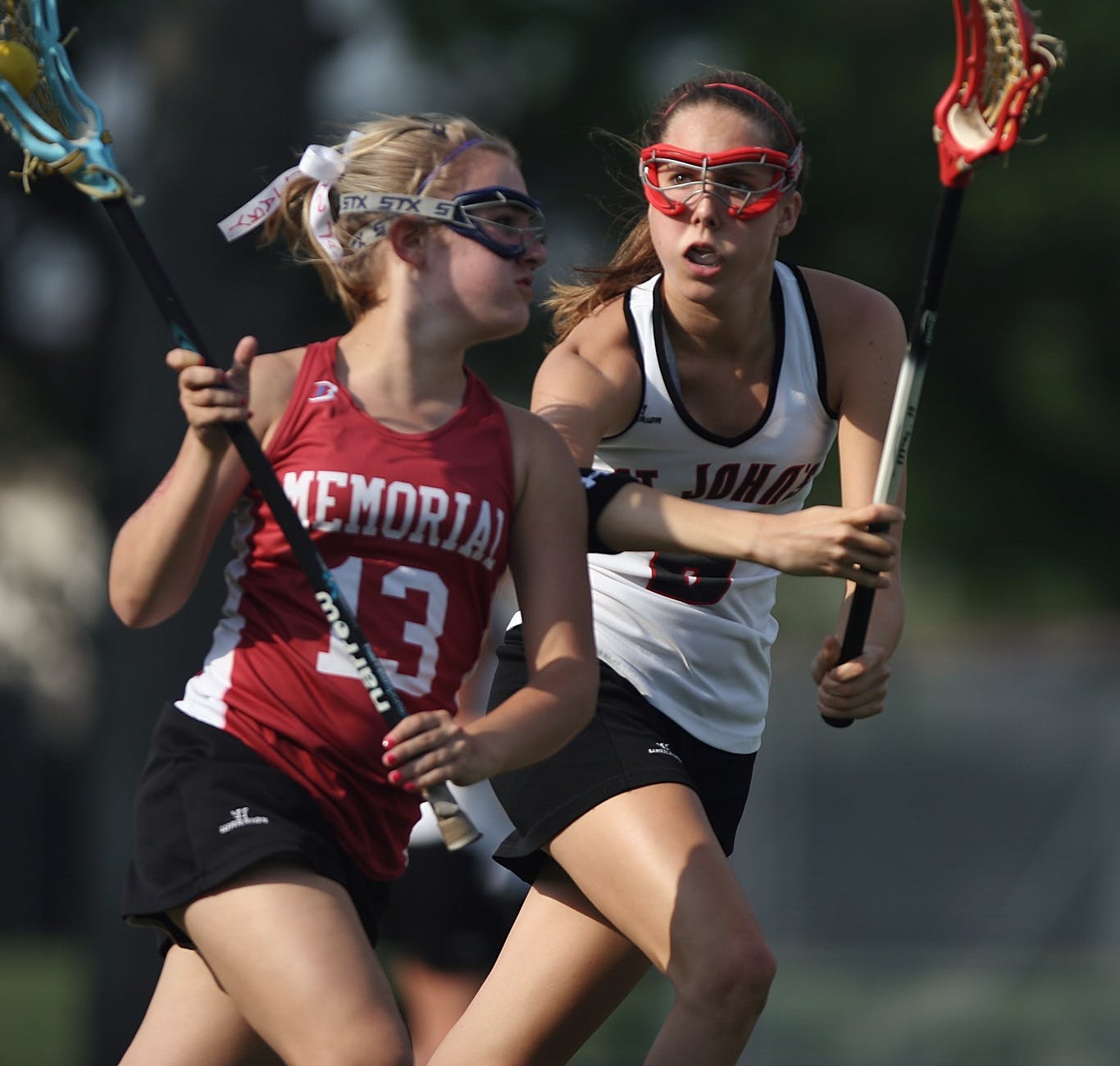
A few years ago I was pleased to get a call from an athlete who thought her lacrosse coach was wrong. Seems the coach had decided to adjust their weekly schedule to give the players a recovery day and do some team building activities. The athlete was calling because she thought the coach had picked the wrong day and wanted to know what I thought.
I was pleased was because I spend a lot of time working with athletes and clients to help them understand how the dynamics of stress and rest work together to improve health and fitness. In our no pain no gain, bigger is better culture that is often an uphill march. But, she got it and now she was thinking for herself, applying it to her situation and her teammates.
I don’t judge another coach’s strategy or tactics without hearing their thinking. And, if an athlete has a question for the coach then that’s who they need to talk to. So, I listened, asked a few questions and then told the player that it sounded like a great opportunity to have a conversation with her coach. She did and in the end it worked out great. The team had their recovery time, the player was on board and the coach had a chance to share her thinking in a positive way.
When we’re working with people, especially when we’re helping in their development it’s not enough to tell them what to do or how to do it or even why they should do it. It’s essential to help them understand how things work, in this case how stress and recovery work together to produce growth.
When someone understands how things work two things happen. First, they can apply their new learning to themselves in other situations out there in the wild. This player took what she learned in the gym and applied it to her sport and her team. Second, when we understand how something works we can ask better questions and have better conversations. This player could ask her coach a legitimate question, listen to the answer and share her own thinking. It wasn’t a challenge to authority, it was a dialogue; a way of working together and contributing.
People who keep the secret of how something works to themselves are often doing it because they either don’t know or because it gives them power. When we want the best for people, and the team, we want to give it away. The more people know how something works the easier it is to apply it creatively, work together and make things better.
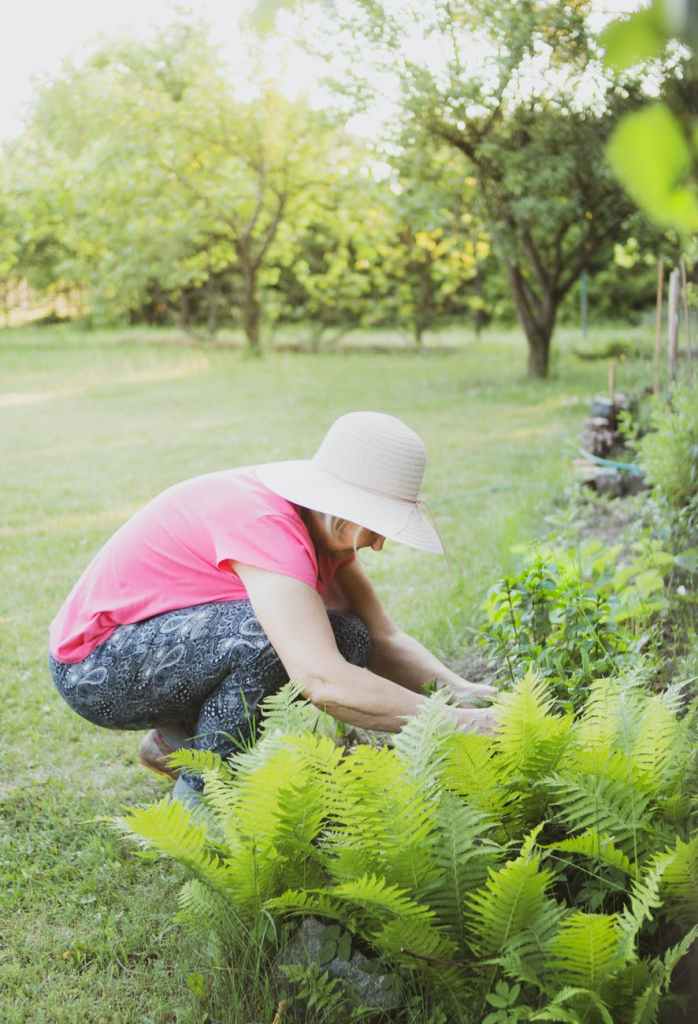
If you want to grow your health or fitness or improve your performance it’s helpful to think like a gardener more than a mechanic. We don’t really make ourselves healthier or stronger or turn ourselves into better runners. Instead we cultivate the conditions out of which that health or performance can emerge. The changes and growth emerge because of the skillful application of the right kind and amount of activity at the right times balanced with rest, recovery, nutrition and the like.
Like tending a garden it’s about understanding how things grow and then learning to take out the things that get in the way: the wrong exercises, poor nutrition, a no pain no gain mentality. And then put in the things that stimulate growth: the right exercises in the right dose, good food, sleep and recovery.
We’re human beings, amazing living organisms and we flourish when the conditions are right. Are you cultivating the conditions for flourishing?







 FLOW STRETCH AND MOVEMENT